Sciatica is a common problem that causes pain from your lower back to your leg. This pain happens because the sciatic nerve gets irritated or pressed. Sitting for long hours, bad posture, or sudden movement can lead to lower back pain and sciatica.
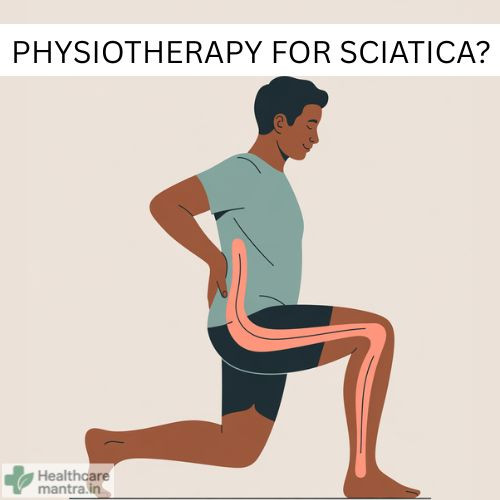
The good news is that physiotherapy for sciatica can help reduce pain and improve movement. The only challenge is that you need to move the painful area gently.
What Causes Sciatica?
Sciatica usually happens when a disc problem, tight muscles, or stiffness in the spine presses on the nerve. This causes pain, burning, numbness, or tingling in the leg. Instead of only taking pain medicine, sciatica physiotherapy treatment helps fix the root problem.
How Physiotherapy Helps in Sciatica Pain Relief
Physiotherapy for sciatica uses gentle stretches and exercises to reduce pressure on the nerve. These sciatic nerve exercises help improve flexibility, reduce swelling, and support healing. The goal is slow and safe movement, not hard workouts.
Easy Exercises for Sciatica Pain Relief
- Piriformis stretch to relax tight buttock muscles
- Knee-to-opposite-shoulder stretch to ease nerve pressure
- Cat-cow stretch to improve spine movement
- Gentle hamstring stretch to reduce leg tightness
Doing these sciatic nerve exercises regularly can give long-term sciatica pain relief.
When to See a Doctor or Physiotherapist
If your pain lasts more than a few weeks or becomes worse, you should consult a physiotherapist or doctor. Some cases of lower back pain and sciatica need professional care to avoid long-term problems.
Final Thoughts
Physiotherapy is not a quick cure, but it is one of the best ways to manage sciatica safely. With patience and regular sciatica physiotherapy treatment, your pain can slowly reduce and your movement can improve.